.png?width=400&height=120&name=HarrierLogoNew25_400x120_transback%20(1).png "harrierLLC_logo")

In the new paradigm of AI-enabled everything, micro-businesses (fewer than 50 employees) and nonprofit associations are now at the epicenter of risk when it comes to cyber security. Its been estimated that over 40% of all cyberattacks are specifically aimed at small organizations.
AI empowered bad guys
The rise of Generative AI has opened up doors for everyone. Unfortunately, that includes hackers and malcontents.
In late 2025, approximately 40% of phishing emails were identified as AI-generated, allowing attackers to craft context-aware, messages that bypass traditional human intuition. For a small team, the lack of rigid dual-authorization (think entering a password then getting a passcode texted to you, etc.) makes this highly effective.
Associations and microbusinesses are "soft targets"
Nonprofit associations have emerged as particularly vulnerable, experiencing a 57% year-over-year surge in attacks by November 2025. Adversaries view these groups as "soft targets" because they manage a "treasure trove" of information and are typically managed by small teams and fewer resources for tech.
Furthermore, organizations providing critical, time-sensitive services, such as food distribution or legal aid, have a low tolerance for downtime, which dramatically increases the likelihood of a ransom payout.
The gaps
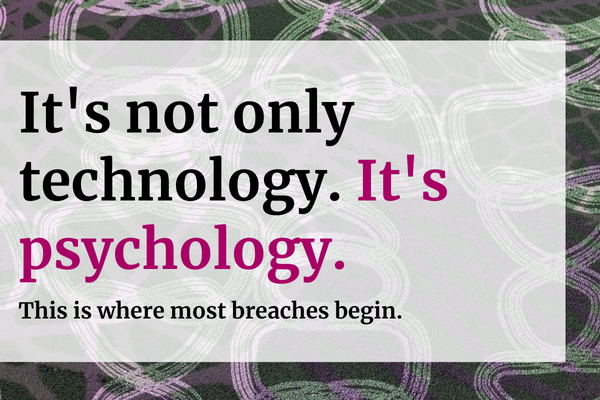
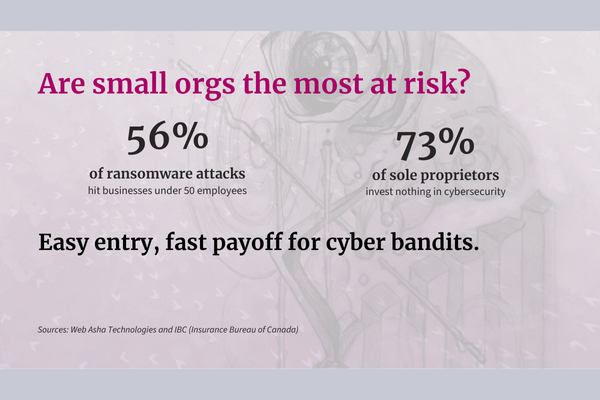
The greatest risk to these organizations is not the technology itself, but a persistent "security poverty line" driven by psychological biases. Currently, 60% of small business owners believe they are "too small" to be a target, an assumption that leads directly to underinvestment. The statistics tell a different story: 56% of ransomware hits target businesses with fewer than 50 employees, and 73% of sole proprietors invest absolutely nothing in cybersecurity.
Structurally, 52% of SMBs rely on a "DIY IT" model using untrained internal staff. This fragmented defense is easily overwhelmed by modern automated scanning tools that attempt to find unpatched systems 36,000 times per second. The stakes are existential.
Getting started
First, don’t panic. If you are overseeing tech or systems for a small organization, there are steps you can take to begin to lower your risk! It doesn’t have to be overwhelming or extremely cost-prohibitive; in fact, you have an advantage because you can move faster than large organizations with longer timelines to make decisions.
Survival in 2026 requires moving beyond basic hygiene.
Here are some simple steps you can take to manage your risk immediately:
- Instruct your staff to not overshare about your tech stack in public digital spaces, keep it fairly general.
- Implement multi-factor authentication [link] in core systems ASAP if you haven't already. Definitely begin implementing password storage, update and security protocols. This definitely includes your Google or Microsoft work accounts and other key systems like HubSpot or central databases.
- Talk about cyber risk and phishing scams monthly with your team, including case studies of what happened and how.
- Create a proactive plan of response and keep it updated, dust off that old business continuity plan and truly make it a living guide for fast and intelligent response to potential breaches.
- Start discussions at the board level about potential threats, including member/stakeholder data breaches, potential ransom threats, and budgets for security long term.
Looking for even more security?
Phishing-resistant Multi-Factor Authentication (MFA) via FIDO2 hardware keys is the gold standard in the corporate world. Because the threat landscape now exceeds the capacity of internal staff, transitioning to a Managed Service Provider (MSP) for proactive, behavior-based detection (EDR) is a robust way for small organizations to achieve professional-grade resilience.
Finally, as teams adopt AI tools for efficiency, they must guard against "Shadow AI." With 1 in 35 GenAI prompts carrying a high risk of sensitive data leakage, a single employee inputting donor details into a public AI model can inadvertently provide threat actors with the keys to the kingdom.
Harrier takeaway
Start with what you control, begin the dialog with staff and board, and create a phased plan to improve security and stay aware.
Sources
- 2026 Cybersecurity Alert (Harrier)
- 2025 OpenText Cybersecurity Threat Report
- Microsoft Digital Defense Report 2025
- CyberProof 2025 Mid-Year Cyber Threat Landscape Report
- CISA Guidance for Civil Society
- IBM X-Force 2025 Threat Intelligence Index
- Guardz 2025 SMB Cybersecurity Report
- 2025 Cybersecurity Almanac
- Total Assure 2025 Small Business Stats
- Check Point Global Cyber Attacks Study
- IBC Small Business Cyber Risk Report (Insurance Bureau of Canada)
- The Micro-Business Cyber Crisis (Q4 2025 Strategic Analysis)
- Nonprofit Cybersecurity Research and Mitigation (2025)
- The Rapid Response Roadmap for Digital Defense